
13 Differences Between Windows and Linux Operating Systems
It's a bit difficult to compare Windows, which has more than 1 billion users worldwide, and Linux, which has only 32 million users. However…

It's a bit difficult to compare Windows, which has more than 1 billion users worldwide, and Linux, which has only 32 million users. However…
It's a bit difficult to compare Windows, which has more than 1 billion users worldwide, and Linux, which has only 32 million users. However, Windows users who have heard of Linux's reputation may need information about what the differences are between them.
Of course, between two operating systems, one is completely free and the other is paid. certain differences is available. These differences sometimes put Windows and sometimes Linux ahead of the operating system.
Before we start: What is the Linux operating system?
linux, Unix standards It is free and provides a programming interface and user interface compatibility based on open source an operating system. You can find more detailed information about the Linux operating system by clicking here.
Windows and Linux operating system differences
- User classification
- Usage rates
- core structure
- File systems
- Security measures
- Compatibility
- Ease of use
- Security
- Source Code
- Licence
- Multimedia possibilities
- gaming experience
- Programming possibilities
User classification:
There are three types of user options in the Linux operating system. These; They are divided into normal, administrator and service users. There are four types of user account options in Windows. These are; It is divided into executive, standard, child and guest.
Usage rates:

According to research, it is stated that there are 92.63% of Windows operating system users in the world. Only 1% of the remaining users use Linux. The reason why Linux has such a low rate is that it has a complex structure for many users compared to Windows.
Microsoft has licensing agreements with various PC manufacturers. With these license agreements, the Windows operating system comes pre-installed on the computer. As a result, Windows is gaining popularity over Linux. Although many PC vendors these days have started to distribute the Linux operating system installed on their computers, they cannot show the impact that Windows has.
core structure
While the Linux operating system uses monolithic kernels that consume more working space, Windows uses microkernels that take up less space than Linux but reduce the operating efficiency of the system. A monolithic kernel is an operating system kernel that consists of only a single file. Monolithic cores are also used in dual-core processor productions, and can also be described as a "single-piece core".
File systems

Files in Windows; It is stored in directories/folders on different data drives like C:, D:, E:. In Linux, this process works a little differently. In Linux, files start from a main file and are divided into different branches in the form of a tree. Linux perceives everything you install on the operating system as a file. For example, a mouse device is considered a file on Linux.
Security measures

Many Windows users encounter some security issues because hackers often target Windows due to its prevalence. Additionally, consumer editions of Windows were originally designed to easily manage single-user computers without a network connection, so built-in security measures does not have. Therefore, it is more vulnerable to attacks.
Microsoft to fix instant security vulnerabilities Windows Update It tries to protect the operating system and users by releasing updates at certain times. Although these updates make the computer more optimized and protected, they do not eliminate all flaws.
Linux is based on a multi-user architecture, which makes it different from single-user operating system like Windows. much more stable It makes you feel better. Since Linux is driven by developers and communities from all corners of the world, any new issue that arises can be resolved within a few hours. Therefore, when users encounter a problem, they can find the solution in a very short time.
Compatibility

Many programs are now compatible with the Windows operating system. There are many programs compatible with the Linux operating system. However, Windows does not specifically support most programs and games. compatibility improvements Since it is also organized, it can be seen as one step ahead in this regard.
Even if the development of Windows is stopped one day, users will continue to use the operating system. for a long time they can continue to use it (for example, Windows XP can still be used). We can give the game client Steam as an example in this regard. Released in 2003, Steam could have continued to work on Windows versions from those years if it had never been developed since then. However, such a scenario is not possible because it is shaped according to our technological needs.
Linux, on the other hand, is quite weak in this regard, as Windows users struggle with underrated compatibility regulations.
Ease of use
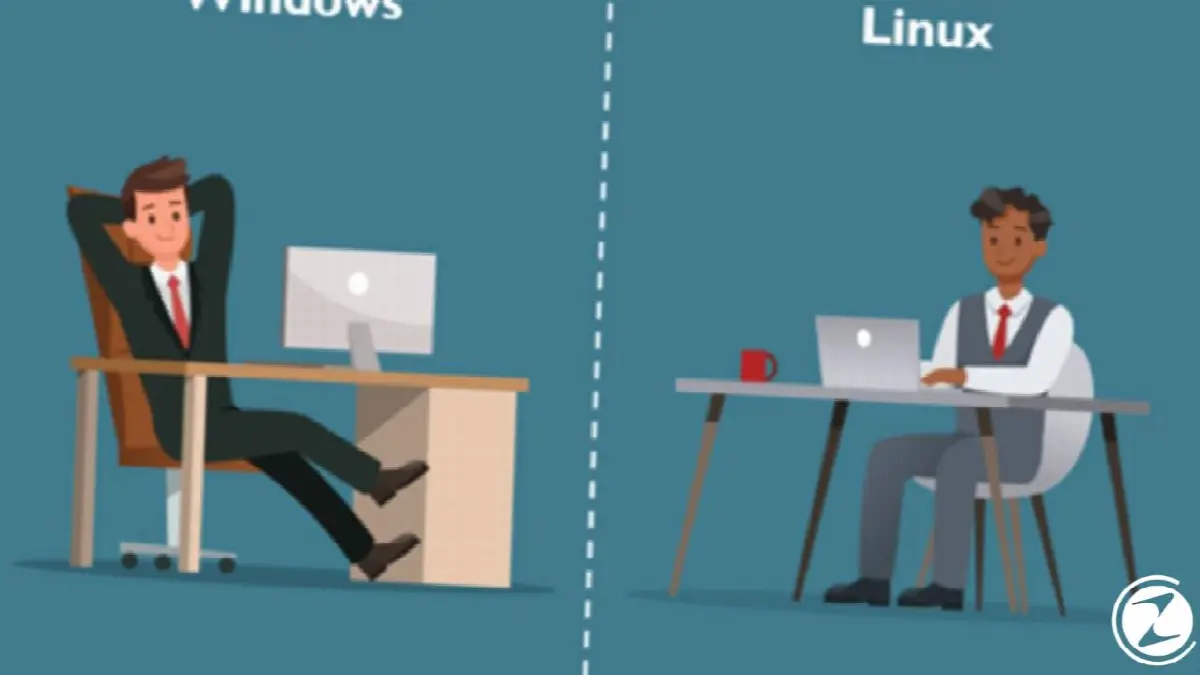
When considering usability, we must consider Linux's leap in this regard in recent years. Distributions such as Linux Mint and Ubuntu allow users to carry out their daily activities extremely easily. by making it simpler developed.
Windows is becoming more and more widespread due to the development of the computer market. Many computers introduced to the market come with the Windows operating system. Also, Windows' goal is not advanced, users of all levels Because it is, it is ahead of Linux in this regard.
Security

If you are a Linux operating system user, you can feel safe. Having Linux means the system is yours and yours alone. Most Linux systems today a high-level encryption option It comes with.
Unlike Linux, Windows has increased its security awareness in recent years. to look through advertising eyes started. Although there are functional improvements in security, security is much more difficult for Windows compared to Linux (One of the reasons is the difference in usage rates).
source code
Linux open source is an operating system. If Windows commercial is an operating system. Linux users have access to the source code, on the Windows side, there is no access to the source code except for select people.
In Linux, users can access the source code of the kernel and modify this code according to their needs. Errors in the operating system can therefore be fixed quickly. However, this may be seen as a weakness by hackers. On Windows side only selected people They have access to the source code.
Licence

Many Linux kernels are completely free. Companies may offer paid support for their own programs, but the underlying softwareIt is free to download and install. As you know, Windows is paid.
Multimedia possibilities
Both Linux and Windows operating systems are rich in multimedia applications. On older versions of Linux adjust audio and video options It could be difficult for some users. In addition, Linux users can use most of the multimedia applications for free. Although free applications are available on Windows, users may have to pay a certain fee to access all the features of the software.
gaming experience

If you are a gamer and need 100% compatibility in games or want a user-friendly system, you should choose Windows. Among other clients and options, Steam offers both From AAA publishers as well as providing a wide range of games from small independent developers. On the Linux side, Steam now allows you to install Windows games. However, since this is still in beta, many Windows games do not work.
Programming possibilities:

Linux supports almost all major programming languages (Python, C / C++, Java, Ruby, Perl etc.) It supports. It also offers users a wide range of applications that are useful for programming.
The Linux terminal is far superior to the Windows command line for developers. You can also find many libraries developed for Linux here. Many programmers Using the package manager in Linux They can do their job easily. The option of creating scripts in different shells is seen as one of the most important factors why programmers choose to use the Linux operating system.
Every business is unique. Let’s explore how we can tailor these ideas to your own digital project.


